Sri Rudram, a profoundly revered Vedic hymn, finds increasing accessibility through English resources like those offered by Vignanam.org, aiding comprehension.
Its significance stems from its powerful invocations and the potential for spiritual benefit through recitation, even with English transliteration.
Many seek PDF versions for study, alongside translations, to unlock the hymn’s depth and connect with its ancient wisdom and potent energy.
What is Sri Rudram?
Sri Rudram is a core component of the Krishna Yajur Veda, specifically the Sri Rudra Prasna, representing a powerful hymn dedicated to Lord Shiva, though encompassing broader Vedic deities. It’s not merely a prayer, but a complex and layered invocation, seeking blessings, protection, and ultimately, realization of the divine.
The hymn is divided into two primary sections: the Namakam and the Chamakam. The Namakam consists of names and attributes of Rudra, while the Chamakam details requests for various blessings – peace, prosperity, longevity, and freedom from fear. Increasingly, individuals are turning to English translations and transliterations to engage with this sacred text.
The availability of Sri Rudram in PDF format, coupled with English translations, particularly those found on resources like Vignanam.org, has democratized access to this ancient hymn. This allows a wider audience to understand its profound meaning and participate in its recitation, fostering a deeper connection to Vedic tradition and spirituality. Understanding the meaning is paramount, even when utilizing transliterated versions.
Historical Significance of the Rudram
The Rudram’s origins are deeply rooted in the Vedic period, dating back millennia, forming a vital part of the Krishna Yajur Veda’s Taittiriya Samhita. Its historical importance lies in its continuous recitation and preservation through oral tradition, passed down through generations of Brahmins.
Historically, the Rudram was integral to Vedic rituals and ceremonies, often performed for specific purposes like seeking protection from calamities or invoking divine grace. The hymn’s enduring popularity speaks to its perceived efficacy and spiritual power. The advent of digital resources, including English translations and PDF versions, marks a new chapter in its accessibility.
Websites like Vignanam.org play a crucial role in preserving and disseminating this knowledge, offering English resources that bridge the gap between ancient tradition and modern understanding. The availability of Rudram in PDF format allows for wider study and personal practice, ensuring its continued relevance for future generations, fostering a deeper connection to its historical and spiritual roots.
The Rudram’s Place in the Vedas
Sri Rudram occupies a prominent position within the Krishna Yajur Veda, specifically as part of the Taittiriya Samhita. It’s considered a Shakti hymn, focusing on the fierce and benevolent aspects of Lord Shiva, known as Rudra. Its inclusion within the Vedas signifies its inherent sacredness and authority.
Unlike some Vedic hymns focused solely on deities or cosmic principles, the Rudram uniquely combines praise, invocation, and a powerful seeking of blessings. The increasing availability of English translations and PDF versions, like those found on Vignanam.org, highlights its growing accessibility;
This accessibility allows a broader audience to explore its Vedic roots and understand its significance within the larger framework of Vedic literature. The Rudram isn’t merely a standalone hymn; it’s a vital component of the Vedic tradition, preserved and transmitted through centuries, now readily available in digital formats, including convenient PDF documents for study and recitation.

Understanding the Rudram Text
Sri Rudram is divided into two sections: Namakam and Chamakam, both available in English PDF formats for detailed study and comprehension.
These sections offer distinct approaches to invoking Rudra, enriching the spiritual experience.
The Namakam Section
Namakam, the initial portion of Sri Rudram, consists of a series of invocations addressed directly to Lord Rudra, employing the word “namo” – salutations. Numerous resources, including readily available English PDF versions, facilitate a deeper understanding of these powerful verses.

Each verse within Namakam presents a different name or attribute of Rudra, praising His various aspects and seeking His blessings. These attributes range from benevolent to fierce, acknowledging the totality of the divine.
Studying the English translations alongside the original Sanskrit, often found in PDF format, reveals the nuanced meanings embedded within each invocation. Vignanam.org provides valuable resources for both the text and its interpretations.
The repetitive nature of “namo” isn’t merely stylistic; it’s a powerful meditative practice, fostering a sense of surrender and devotion. Accessing a well-formatted English PDF allows for focused study and recitation, enhancing the spiritual impact of Namakam.
The Chamakam Section

Following the Namakam, the Chamakam section of Sri Rudram shifts in tone, moving from invocations to requests – a petitioning of Lord Rudra for various blessings and boons. Many seekers utilize English translations, often available as convenient PDF downloads, to grasp the specific desires expressed within each verse.
The verses in Chamakam repeatedly ask for “cha me” – “may it be mine” – relating to a wide array of worldly and spiritual benefits, including prosperity, health, longevity, and freedom from fear.
Resources like Vignanam.org offer comprehensive English versions, including detailed notes and explanations, often compiled into accessible PDF documents. These resources clarify the symbolic meaning behind each request.
While Namakam focuses on praising Rudra’s attributes, Chamakam demonstrates a heartfelt yearning for divine grace. Studying the English PDF alongside the Sanskrit text reveals the depth of this yearning and the profound connection sought with the divine.
Key Deities Invoked in Sri Rudram
While primarily dedicated to Lord Rudra, Sri Rudram subtly invokes a spectrum of Vedic deities, reflecting the interconnectedness of the divine. Understanding these nuances is greatly aided by studying English translations, frequently found as downloadable PDF files.
Lord Shiva, as Rudra, is central, but aspects of Vishnu, Indra, and Agni are interwoven through epithets and descriptions. The hymn acknowledges Rudra’s multifaceted nature, encompassing both benevolent and fierce qualities.
Resources like Vignanam.org provide detailed analyses in English, often in PDF format, explaining how specific verses allude to these other deities and their roles within the cosmic order.
The hymn isn’t polytheistic, but rather recognizes that all divine manifestations are ultimately expressions of the same supreme reality. Accessing a comprehensive English PDF allows for a deeper appreciation of this intricate theological framework and the hymn’s profound spiritual message.

Sri Rudram in English: Translations and Resources
Numerous English translations of Sri Rudram are available, often as convenient PDF downloads, facilitating study and recitation for a wider audience.
Vignanam.org stands out as a key resource, offering both text and insightful interpretations in accessible English PDF format.
Availability of English Translations
English translations of Sri Rudram are becoming increasingly prevalent, catering to a global audience eager to connect with this sacred Vedic text. Previously limited to those proficient in Sanskrit, the hymn’s profound meaning is now accessible to many more through dedicated efforts.
Several sources offer complete translations, often available as downloadable PDF documents. These PDF versions frequently include transliteration alongside the English rendering, aiding pronunciation and understanding for those unfamiliar with the Devanagari script.
The quality of translations varies, with some prioritizing literal accuracy while others focus on conveying the hymn’s spiritual essence. Scholarly translations often include detailed notes and commentary, providing deeper insights into the nuances of the text.
Furthermore, simplified versions are available for beginners, offering a more approachable introduction to Sri Rudram. The proliferation of these resources, particularly in easily shareable PDF format, demonstrates a growing interest in Vedic traditions and their timeless wisdom.
Vignanam.org as a Resource for English Rudram
Vignanam.org stands out as a comprehensive online resource for those seeking to study and understand Sri Rudram in English. The website provides not only a complete English translation of the Namakam and Chamakam sections but also offers multimedia resources to enhance the learning experience.
Users can access the text in various formats, including Devanagari, Telugu, and Tamil, alongside the English version, facilitating comparative study. Conveniently, Vignanam.org often provides downloadable PDF versions of the Rudram, making it easy to print or study offline.
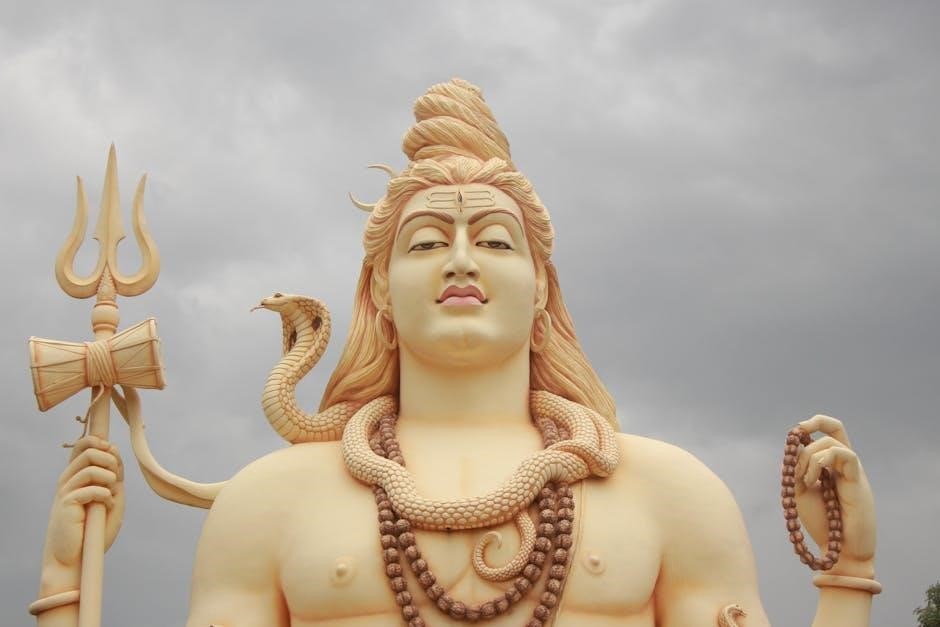
The site’s focus extends beyond mere translation; it delves into the meaning of individual verses, offering insightful explanations and interpretations.
Furthermore, Vignanam.org features resources on proper pronunciation and recitation techniques, aiding those wishing to chant the hymn. It’s a valuable platform for both beginners and experienced practitioners seeking a deeper connection with Sri Rudram.
Importance of Understanding the Meaning
While reciting Sri Rudram, even with the aid of an English transliteration or a readily available PDF, simply uttering the sounds isn’t enough to unlock its full potential. Truly understanding the meaning behind each verse is paramount for a transformative experience.
The hymn isn’t merely a collection of words; it’s a powerful invocation of divine energies, and comprehension allows for a deeper connection with these forces. Knowing the meaning facilitates focused intention during recitation, amplifying its effects.
Resources like those found on Vignanam.org, offering detailed English translations and explanations, are crucial for this understanding.
Without grasping the significance of verses like ‘sūśca me prasūścả me’, the recitation becomes a mechanical exercise, losing its spiritual depth. A PDF with annotations can further aid in this process, fostering a more meaningful and impactful practice.

Chanting and Recitation of Sri Rudram
Sri Rudram recitation benefits from proper pronunciation, aided by English transliterations and accessible PDF resources for accurate vocalization and deeper engagement.
Consistent practice unlocks spiritual rewards.
Proper Pronunciation in English Transliteration

Achieving accurate pronunciation of Sri Rudram when reciting in English transliteration is crucial, despite inherent challenges. Resources like Vignanam.org offer valuable support, providing phonetic guides alongside the hymn’s text and PDF versions.
The transliteration aims to represent the sounds of the Sanskrit verses using the Roman alphabet, but subtle nuances can be lost. Careful attention to vowel sounds and consonant combinations is essential. For example, accurately rendering sounds like ‘ṛ’ or nasalized vowels requires practice and guidance.
Utilizing audio recordings of experienced reciters alongside the English transliteration and PDF text is highly recommended. This allows for auditory learning and helps refine pronunciation. Focusing on the rhythm and intonation, as well as the correct articulation of each syllable, enhances the effectiveness of the recitation and deepens the connection with the hymn’s sacred energy. Consistent practice, coupled with mindful listening, will gradually improve pronunciation and foster a more meaningful experience.
Benefits of Reciting Sri Rudram
Reciting Sri Rudram, even utilizing English transliteration and readily available PDF versions, is believed to bestow numerous spiritual and worldly benefits. Traditionally, it’s considered a powerful practice for purification, protection, and the fulfillment of desires.
The hymn’s potent vibrations are said to dispel negative energies, alleviate suffering, and promote overall well-being. Regular recitation fosters a deeper connection with the divine, cultivating inner peace and clarity. Many believe it strengthens the mind, enhances concentration, and improves mental resilience.
Furthermore, Sri Rudram is often recited for specific intentions, such as healing, prosperity, and overcoming obstacles. Accessing resources like those on Vignanam.org, including PDF texts and translations, makes this practice accessible to a wider audience, allowing individuals to experience its transformative power regardless of their Sanskrit proficiency. The consistent and devoted recitation is key to unlocking these benefits.
The Role of ‘Yakshvāmahe’
The recurring phrase “Yakshvāmahe” within Sri Rudram holds profound significance, representing a deliberate offering and a focused intention during recitation. It translates to “we offer,” signifying a conscious dedication of oneself and one’s actions to the divine.
This offering isn’t merely ritualistic; it’s a surrender of the ego and a seeking of grace. When utilizing English transliterations or PDF versions for study, understanding “Yakshvāmahe” is crucial for grasping the hymn’s core message. It’s a call to align oneself with the benevolent forces of the universe.
Resources like Vignanam.org often highlight this aspect, emphasizing the importance of mindful recitation. The phrase isn’t simply spoken; it’s felt as a genuine offering. It’s a pivotal element in unlocking the transformative potential of Sri Rudram, fostering a deeper spiritual connection and promoting inner harmony.

Specific Verses and Their Meanings
Sri Rudram’s verses, accessible via English translations and PDF resources, reveal profound meanings, offering insights into divine attributes and seeking blessings.
Analyzing key lines unlocks deeper understanding.
Analyzing ‘Sūśca me prasūścả me’
Sri Rudram’s verse, “sūśca me prasūścả me sīram ca me layaścá ma ṛtam ca me. mṛtam ca meyakṣmam ca me namayacca me jīvātuśca me dirghayutvam cá me namitram ca me bhayam ca…”, is a powerful plea for completeness and well-being, readily available for study in English translations and PDF formats.
This line, often found within resources like Vignanam.org, requests auspiciousness (sūśca), progeny (prasūścả), peace (sīram), and freedom from destruction (laya). It’s a yearning for truth (ṛtam) and immortality (mṛtam), coupled with a desire for wholeness (yakṣmam).
The verse extends to seeking protection (namayacca), vitality (jīvātuśca), longevity (dirghayutvam), friendship (namitram), and freedom from fear (bhayam). Understanding this verse, aided by English resources, reveals a holistic approach to spiritual and material welfare, demonstrating the hymn’s comprehensive nature.
Accessing a PDF allows for detailed examination alongside transliteration and commentary.
Decoding ‘uk a̍ntamu̱ta mā na̍’
The mantra “uk a̍ntamu̱ta mā na̍ , uk i̱tam…” from Sri Rudram, frequently studied via English translations and accessible in PDF versions, represents a commitment to positive thought, speech, and action. Resources like Vignanam.org provide valuable context for understanding its nuanced meaning.

“Uk” signifies affirmation, while “antamuta” implies sweetness or pleasantness. The phrase essentially translates to “May we have sweet thoughts, sweet deeds, and sweet offerings.” It’s a dedication to cultivating inner harmony and expressing it outwardly.
The subsequent “uk i̱tam…” extends this intention to sweet speech and honeyed words directed towards the divine. This mantra embodies a conscious effort to align oneself with positivity and auspiciousness. Studying the verse in a PDF format, alongside English interpretations, enhances comprehension.
It’s a powerful affirmation for personal transformation and spiritual growth.
Exploring the Significance of ‘manyava’
The term ‘manyava,’ frequently encountered when studying Sri Rudram – often through English translations and readily available PDF resources – refers to Lord Rudra’s anger or wrath. Understanding ‘manyava’ is crucial for a complete interpretation of the hymn, as detailed on sites like Vignanam.org.
However, it’s not simply negative emotion. ‘Manyava’ represents a potent, purifying force, capable of destroying negativity and paving the way for renewal. It’s a fierce aspect of the divine, essential for maintaining cosmic balance.
The hymn’s salutations to ‘manyava’ aren’t about fearing Rudra’s anger, but rather acknowledging its power and seeking its protective influence. A PDF version of Sri Rudram with English notes clarifies this nuanced perspective.
It’s a recognition that destruction is sometimes necessary for creation, and that even seemingly harsh forces can ultimately serve a benevolent purpose.