Understanding Shin Splints
Shin splints, or medial tibial stress syndrome, frequently affect runners and demand attention; stretching and strengthening lower leg muscles can significantly ease discomfort and aid recovery.
What are Shin Splints? (Medial Tibial Stress Syndrome)
Shin splints, clinically known as medial tibial stress syndrome, represent a common overuse injury, particularly among runners. This condition manifests as pain along the shinbone (tibia), stemming from inflammation of the muscles, tendons, and bone tissue around the tibia. The pain can range from mild, aching discomfort to sharp, intense pain, often worsening during and after exercise.

It’s a condition that sparks fear in runners, potentially requiring prolonged rest for resolution. While not a fracture, persistent shin splints can progress to stress fractures if left unaddressed. Understanding the underlying causes and implementing appropriate preventative measures, including targeted stretching and strengthening exercises, is crucial for effective management and a swift return to activity. Early intervention, guided by a healthcare professional, is highly recommended.
Common Causes of Shin Splints
Several factors contribute to the development of shin splints. Incorrect footwear and running on hard or uneven surfaces are frequently cited as primary culprits. A sudden increase in training intensity or duration, without adequate conditioning, places excessive stress on the lower legs.
Biomechanical issues, such as flat feet or overpronation, can also increase susceptibility. Weak calf muscles and insufficient stretching contribute to inadequate support and shock absorption. Improper warm-up and cool-down routines further exacerbate the risk. Essentially, shin splints arise from repetitive stress exceeding the body’s capacity to recover, leading to micro-damage within the tissues surrounding the shinbone. Addressing these contributing factors is vital for both prevention and treatment.
Risk Factors for Developing Shin Splints
Certain individuals are more prone to developing shin splints than others. Runners, particularly those new to the sport or increasing their mileage rapidly, face a heightened risk. Individuals with flat feet or excessive pronation experience increased stress on their shin muscles.
Those with inadequate footwear, lacking proper support and cushioning, are also vulnerable. Weak core and lower leg muscles contribute to poor biomechanics and increased strain. Previous history of shin splints significantly elevates the likelihood of recurrence. Female athletes, and those participating in high-impact sports, may also be at greater risk. Addressing these risk factors through appropriate training, footwear, and strengthening exercises is crucial for prevention.

Diagnosis and Assessment
Accurate diagnosis involves a physical exam, ruling out fractures or compartment syndrome, and sometimes imaging; prompt medical evaluation is essential for effective management.
Physical Examination for Shin Splints
A thorough physical examination is the cornerstone of diagnosing shin splints. Healthcare professionals will typically begin by discussing your activity level, training history, and the specific location and characteristics of your pain. Palpation, or feeling along the tibia (shin bone), is crucial to identify areas of tenderness. The examiner will assess the pain’s reproduction with specific movements, such as dorsiflexion (lifting the foot up) and plantarflexion (pointing the foot down).
They’ll also evaluate your foot structure and biomechanics, looking for factors like overpronation (excessive inward rolling of the foot) which can contribute to shin splints. Range of motion assessments of the ankle and foot are performed to identify any limitations. Neurological testing ensures there’s no nerve compression. Careful observation of your gait (walking or running pattern) can reveal biomechanical issues. This comprehensive approach helps differentiate shin splints from other potential causes of lower leg pain.
Ruling Out Other Conditions (Stress Fractures, Compartment Syndrome)
Differentiating shin splints from more serious conditions like stress fractures and compartment syndrome is vital. Unlike shin splints, stress fractures present with more localized, severe pain that worsens with activity and is often present even at rest. Compartment syndrome involves pain, swelling, and potentially numbness or tingling due to increased pressure within a muscle compartment.
A key distinction lies in the nature of the pain. Stress fractures typically have pinpoint tenderness, while shin splint pain is more diffuse. Compartment syndrome often exhibits pain disproportionate to the injury. Healthcare providers utilize specific tests, like the compartment pressure measurement, to rule out compartment syndrome. Imaging, such as bone scans or MRIs, may be necessary to confirm or exclude a stress fracture, ensuring accurate diagnosis and appropriate treatment.
Imaging Techniques (When Necessary)

While often diagnosed clinically, imaging techniques become crucial when initial assessment is inconclusive or symptoms persist despite conservative treatment. Radiography, or X-rays, can help rule out stress fractures, though they may not detect early stress reactions. Bone scans are more sensitive for detecting stress fractures, identifying areas of increased bone turnover. However, they lack specificity;
Magnetic Resonance Imaging (MRI) is the gold standard for evaluating shin splints and related conditions. It can differentiate between stress reactions, stress fractures, and soft tissue inflammation. MRI also helps identify compartment syndrome or other underlying issues. The decision to utilize imaging depends on the severity and duration of symptoms, response to treatment, and clinical suspicion of alternative diagnoses, ensuring a precise and informed approach to patient care.

Stretches for Shin Splint Relief
Effective relief comes from targeted stretches, including calf stretches (gastrocnemius and soleus), and tibialis anterior stretches, improving flexibility and reducing tension.
Calf Stretch (Gastrocnemius & Soleus)
Performing calf stretches is crucial for shin splint relief, targeting both the gastrocnemius and soleus muscles. To stretch the gastrocnemius, stand facing a wall, placing one foot slightly behind the other, keeping the back leg straight and heel firmly planted on the ground. Lean forward until you feel a stretch in your upper calf.
For the soleus stretch, perform the same action, but this time bend the back knee slightly. This targets the lower portion of the calf muscle. Hold each stretch for 20-30 seconds, repeating 2-3 times. Consistent stretching improves flexibility, reduces muscle tightness, and alleviates strain on the shinbone, contributing to faster recovery and preventing future occurrences of shin splints. Remember to maintain proper form to maximize effectiveness and avoid injury.
Soleus Stretch (Bent Knee Calf Stretch)
The soleus stretch, a vital component of shin splint rehabilitation, specifically targets the lower calf muscle. Begin by standing facing a wall, positioning one leg slightly behind the other. Crucially, bend the back knee while keeping the heel firmly pressed into the ground. Lean forward gently, increasing the stretch until you feel it in the lower calf region.
Maintaining a slight bend in the knee isolates the soleus muscle, providing a deeper stretch than a traditional straight-leg calf stretch. Hold this position for 20-30 seconds, repeating the stretch 2-3 times on each leg. This exercise enhances flexibility, reduces tightness, and minimizes stress on the tibia, aiding in recovery and preventing recurrence. Proper form is essential for maximizing benefits and avoiding potential discomfort.
Tibialis Anterior Stretch
Stretching the tibialis anterior, the muscle running along the front of your shin, is often overlooked but crucial for shin splint recovery. Begin by kneeling on the floor with the tops of your feet flat against the surface. Gently lean back, increasing the stretch along the front of your shins. You should feel a comfortable pull, not pain.
To deepen the stretch, slightly point your toes. Hold this position for 20-30 seconds, repeating 2-3 times on each leg. This stretch counteracts the tightness often associated with overuse, improving flexibility and reducing strain on the shinbone. It’s important to perform this stretch gently, especially if experiencing acute pain. Consistent stretching of the tibialis anterior contributes to balanced muscle function and injury prevention.
Toe and Ankle Mobility Exercises
Improving toe and ankle mobility is vital alongside dedicated shin stretches for comprehensive recovery. Begin with ankle circles – slowly rotate your ankles clockwise and counterclockwise, performing 10-15 repetitions in each direction. Next, practice toe points and flexes, extending your toes away from you and then curling them under. Repeat this 15-20 times.
Toe yoga, involving spreading and curling toes independently, enhances foot strength and flexibility. Alphabet tracing with your foot further improves range of motion. These exercises address stiffness that can contribute to shin splints, promoting better biomechanics and reducing stress on the tibia. Consistent mobility work supports overall lower leg health and prepares muscles for activity, aiding in a faster return to running.
Strengthening Exercises
Calf raises, toe raises, heel walks, and toe walks are essential for building lower leg strength, supporting the shinbone, and reducing strain during activity.
Calf Raises (Straight and Bent Knee)
Calf raises are a foundational exercise for shin splint rehabilitation, directly addressing the muscles supporting the shinbone and mitigating strain. Performing both straight-knee and bent-knee variations targets the gastrocnemius and soleus muscles respectively, ensuring comprehensive strengthening.
For straight-knee calf raises, stand with feet flat on the floor, then rise onto your toes, keeping your knees locked. Slowly lower back down. Bent-knee calf raises are performed similarly, but with a slight bend in the knees throughout the movement.
Begin with three sets of 15-20 repetitions for each variation. Gradually increase the repetitions or add weight (using dumbbells or a resistance band) as strength improves; Proper form is crucial; avoid rolling your ankles inward or outward. Consistent execution of these exercises will contribute significantly to recovery and prevention of future shin splint episodes.
Toe Raises
Toe raises are a vital, yet often overlooked, component of shin splint rehabilitation, focusing on strengthening the tibialis anterior muscle – a key player in controlling foot and ankle movement. This muscle helps to prevent excessive pronation, a common contributor to medial tibial stress syndrome.
To perform toe raises, sit or stand with your feet flat on the floor. Lift only your toes off the ground, keeping your heels firmly planted. Hold this position for a few seconds, then slowly lower your toes back down.
Aim for three sets of 15-20 repetitions. You can increase the difficulty by adding resistance using a resistance band looped around your feet. Consistent practice of toe raises will enhance ankle stability and reduce the load on the shinbone, promoting faster recovery and preventing recurrence of shin splints.
Heel Walks
Heel walks are a fantastic strengthening exercise incorporated into shin splint rehabilitation programs, specifically targeting the calf muscles – gastrocnemius and soleus. Strengthening these muscles provides crucial support to the shinbone, reducing stress and promoting healing. This exercise also improves ankle dorsiflexion, contributing to a more efficient gait.
To perform heel walks, simply walk across a flat surface lifting your toes off the ground, so you are walking only on your heels. Maintain a slow, controlled pace and focus on engaging your calf muscles with each step.
Start with short distances, such as 20-30 feet, and gradually increase the distance as your strength improves. Aim for three sets of heel walks, resting briefly between each set. This exercise is a simple yet effective way to build lower leg strength and alleviate shin splint pain.

Toe Walks
Toe walks represent another valuable strengthening exercise within a comprehensive shin splint rehabilitation plan, concentrating on the tibialis anterior muscle – the muscle along the front of your shin. Strengthening this muscle is vital for controlling foot drop and supporting the lower leg, thereby diminishing strain on the shinbone and accelerating recovery.
To execute toe walks, walk across a level surface lifting your heels off the ground, so you are walking solely on your toes. Maintain a deliberate, controlled tempo, actively engaging the tibialis anterior with each stride.
Begin with shorter distances, around 20-30 feet, and progressively increase the distance as your strength develops. Strive for three sets of toe walks, with short rest periods between each set. This exercise is a straightforward yet potent method to enhance lower leg strength and reduce shin splint discomfort.
Recovery and Rehabilitation
Effective recovery involves rest, ice application, and low-impact cross-training; a gradual return to running is crucial, alongside consistent stretching and strengthening exercises.
Rest and Ice Application
Initial management of shin splints heavily relies on reducing inflammation and allowing the affected tissues to begin healing. This necessitates a period of rest, which doesn’t necessarily mean complete inactivity, but rather a modification of activities to avoid exacerbating the pain. Reducing high-impact exercises is paramount.
Ice application is a cornerstone of early treatment. Applying ice packs to the affected area for 15-20 minutes at a time, several times a day, helps to minimize pain and swelling. Always wrap the ice pack in a towel to protect the skin. Combining rest with consistent icing provides a strong foundation for recovery.
Listen to your body; pushing through pain will only prolong the healing process and potentially lead to more serious injuries, such as stress fractures. Prioritizing these initial steps is vital before progressing to strengthening and stretching exercises.
Low-Impact Cross-Training Options
Maintaining fitness during shin splint recovery is crucial, but it requires shifting to activities that don’t stress the lower legs. Low-impact cross-training allows you to stay active without hindering the healing process. Excellent options include swimming, cycling, and elliptical training. These activities provide cardiovascular benefits without the repetitive impact of running.
Swimming is particularly beneficial as it’s non-weight bearing, minimizing stress on the shins. Cycling, with proper bike fit, can also be a good choice, but avoid steep hills initially. The elliptical provides a similar motion to running but with reduced impact.
Gradually introduce these activities, starting with shorter durations and lower intensity. Monitor your pain levels closely; any increase in shin pain indicates you’re doing too much, too soon. Cross-training helps preserve fitness while allowing the injured tissues to recover;
Gradual Return to Running
Resuming running after shin splints requires a carefully planned, progressive approach to avoid re-injury. Don’t rush back to your previous mileage or intensity. Begin with a “walk-run” protocol, alternating short intervals of running with walking. For example, start with 1 minute of running followed by 4 minutes of walking, repeating this cycle for 20-30 minutes.
Gradually increase the running intervals and decrease the walking intervals over several weeks; Monitor your shin pain closely; any recurrence signals you’re progressing too quickly. Increase your total weekly mileage by no more than 10% each week.
Focus on proper form and consider running on softer surfaces. Continue performing the stretching and strengthening exercises even after returning to running to maintain support and prevent future issues. Patience is key to a successful and lasting recovery.
Preventative Measures
Prioritize proper footwear, surface selection, and consistent warm-up/cool-down routines to minimize shin splint risk, supporting leg muscles and reducing strain effectively.
Proper Footwear Selection
Choosing the right footwear is paramount in preventing shin splints, as incorrect shoes contribute significantly to this common running injury. Runners should seek shoes appropriate for their foot type – whether neutral, pronated, or supinated – and running style. A professional fitting at a specialty running store is highly recommended to assess gait and identify suitable options.
Consider the cushioning and support offered by different shoe models. Adequate cushioning absorbs impact forces, reducing stress on the tibia. Replace running shoes regularly, typically every 300-500 miles, as cushioning degrades over time, diminishing their protective capabilities. Ignoring this can exacerbate existing issues or trigger new ones. Don’t underestimate the importance of a well-fitted, supportive shoe in mitigating shin splint development.
Surface Considerations (Running Surfaces)
The impact of running surfaces on shin splint development is substantial; harder surfaces like concrete significantly increase stress on the lower legs compared to softer options. Runners should prioritize softer surfaces whenever possible, such as trails, grass, or synthetic running tracks. Varying running surfaces can also help distribute impact forces more evenly, reducing the risk of overuse injuries.
When concrete or asphalt are unavoidable, consider shortening stride length and increasing cadence to minimize ground reaction forces. Be mindful of uneven surfaces, as these can contribute to imbalances and strain. Paying attention to the terrain and adapting your running technique accordingly is crucial for injury prevention. Remember, wrong surfaces can easily cause shin splints.
Warm-up and Cool-down Routines
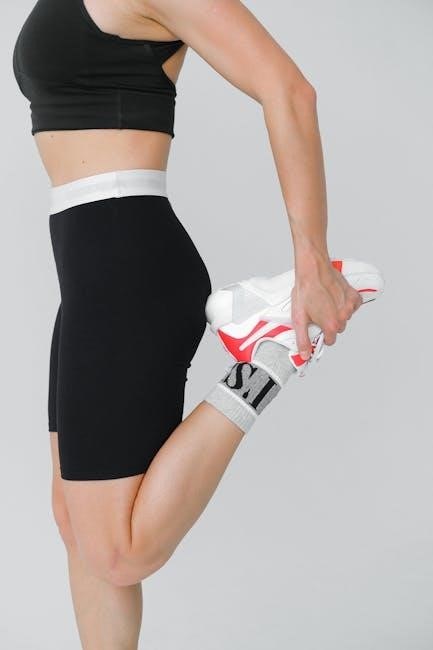
Effective warm-up and cool-down routines are paramount in preventing shin splints and supporting recovery. A dynamic warm-up prepares muscles for activity, increasing blood flow and flexibility. Include exercises like leg swings, ankle rotations, and walking lunges to target the lower leg muscles. Prioritize calf stretches – both gastrocnemius and soleus – before and after running.
Cool-down routines should focus on static stretching, holding each stretch for 20-30 seconds. This helps improve flexibility and reduce muscle soreness. Incorporate stretches for the calf muscles, tibialis anterior, and hamstrings. Consistent adherence to these routines enhances muscle resilience and minimizes the risk of developing medial tibial stress syndrome, aiding in overall shin health.