Ancient Philosophy (6th Century BCE – 6th Century CE)
Early thinkers, like Empedocles, explored fundamental principles, while the rise of Socrates introduced critical self-examination and ethical inquiry․
Plato then developed the Theory of Forms, positing a realm of perfect ideals, and Aristotle refined logic and ethics, grounding thought in observation․
This period laid the groundwork for Western thought, offering a path towards understanding existence, knowledge, and the good life through reasoned discourse․
Pre-Socratic Philosophers
Before Socrates, a diverse group of thinkers emerged in ancient Greece, attempting to explain the universe and our place within it, moving away from mythological explanations․ These Pre-Socratic philosophers, active from the 6th to 5th centuries BCE, focused on cosmology and the fundamental substance – the arche – of reality․
Thales proposed water as this primary element, while Anaximander suggested the boundless apeiron․ Heraclitus emphasized constant change (“You cannot step twice into the same river”), and Parmenides argued for the unchanging nature of being․ Empedocles, with recent textual discoveries like the Strasbourg Papyrus, posited four roots – earth, air, fire, and water – governed by Love and Strife․
Their inquiries, though often speculative, represent a crucial shift towards rational inquiry and laid the foundation for subsequent philosophical development, questioning the very nature of existence and offering early attempts at a coherent worldview․ They sought understanding not through divine revelation, but through observation and reason․
Socrates and the Socratic Method
Socrates (470-399 BCE) revolutionized philosophy, shifting focus from cosmology to ethics and epistemology – the study of knowledge․ Unlike the Pre-Socratics, he didn’t offer definitive answers but employed the Socratic Method: a relentless questioning process designed to expose contradictions and stimulate critical thinking․
He famously claimed to know nothing, believing true wisdom lay in recognizing one’s own ignorance․ Through dialogues, he challenged conventional beliefs about justice, piety, and virtue, forcing Athenians to examine their values․ This method wasn’t about winning arguments, but about pursuing truth collaboratively․
His relentless questioning, however, earned him powerful enemies, ultimately leading to his trial and execution․ Socrates’ legacy lies not in a system of doctrines, but in his commitment to rational inquiry and the examined life, a cornerstone of Western philosophical tradition․
Plato’s Theory of Forms
Plato (428-348 BCE), a student of Socrates, developed the Theory of Forms, a central tenet of his philosophy․ He posited that the physical world we perceive is merely a shadow of a higher realm of perfect, eternal, and unchanging Forms – abstract concepts like Justice, Beauty, and Goodness․
These Forms are the true objects of knowledge, accessible not through sensory experience, but through reason and intellect․ For Plato, a beautiful object participates in the Form of Beauty, but is only an imperfect imitation․ Understanding the Forms is crucial for living a virtuous life․
This theory profoundly influenced Western metaphysics and epistemology, suggesting reality is fundamentally ideal rather than material, and that true knowledge requires transcending the limitations of the senses․
Aristotle’s Logic and Ethics
Aristotle (384-322 BCE), Plato’s student, diverged from his mentor’s idealism, emphasizing empirical observation and systematic categorization․ He developed formal logic, establishing rules for valid reasoning – syllogisms – that remain influential today․ This provided a framework for acquiring knowledge through careful analysis of the natural world․
His Nicomachean Ethics centers on the concept of eudaimonia, often translated as “flourishing” or “living well․” Aristotle argued that eudaimonia is achieved through virtuous activity, finding the “golden mean” between extremes of behavior․
Virtue is cultivated through habit and practical wisdom, guiding individuals towards a fulfilling and ethically sound life, grounded in reason and observation․

Hellenistic Philosophy (323 BCE – 30 BCE)
Following Alexander’s empire, schools like Stoicism and Epicureanism arose, focusing on personal tranquility and virtue amidst political upheaval and uncertainty․
Stoicism: Virtue and Acceptance
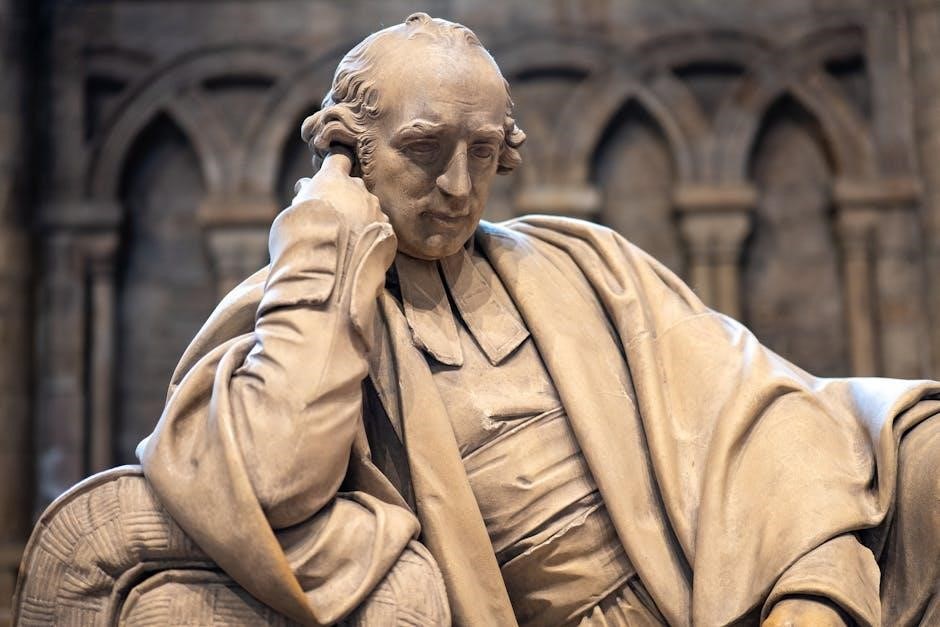
Emerging in the Hellenistic period, Stoicism, founded by Zeno of Citium, presented a compelling path to a fulfilling life centered on virtue as the sole good․ Stoics believed external factors – wealth, health, reputation – were indifferent, neither inherently good nor bad, and therefore shouldn’t dictate inner peace․
Key figures like Epictetus, Seneca, and Marcus Aurelius emphasized accepting what we cannot control, focusing instead on cultivating inner resilience and moral character․ This acceptance wasn’t passive resignation, but a recognition of the natural order of the cosmos․
Living in accordance with nature meant understanding one’s role in the universe and fulfilling it with reason and duty․ Stoicism offered practical tools – self-reflection, negative visualization, and focusing on present actions – to navigate life’s challenges with equanimity and find freedom from emotional turmoil․ It remains remarkably relevant today, offering a framework for navigating modern anxieties․
Epicureanism: Pleasure and Tranquility
Founded by Epicurus, this Hellenistic philosophy often misunderstood, advocated for pleasure as the greatest good, but not in the hedonistic sense often portrayed․ Epicurean pleasure wasn’t about indulgence, but the absence of pain – both physical and mental․
Ataraxia, or tranquility, was the ultimate goal, achieved through prudence, friendship, and a simple life․ Epicureans believed fear of death and the gods were primary sources of unhappiness, and sought to dispel these anxieties through understanding the natural world․
They embraced atomism, believing the universe was composed of atoms and void, thus removing the need for supernatural explanations․ Epicureanism emphasized minimizing pain and maximizing gentle, sustainable pleasures, fostering a life of contentment and freedom from disturbance․ It offered a path to happiness through reasoned self-sufficiency and mindful living․
Medieval Philosophy (6th Century CE – 15th Century CE)
Augustine integrated faith and reason, while Aquinas synthesized Aristotelian thought with Christian theology, shaping scholasticism and medieval intellectual life․
Augustine and the Integration of Faith and Reason
Saint Augustine of Hippo (354-430 CE) stands as a monumental figure bridging classical philosophy and Christian theology․ His work profoundly impacted Western thought, grappling with questions of free will, divine grace, and the nature of evil․
Influenced by Plato, Augustine adapted Platonic ideals to a Christian framework, arguing for the existence of a higher realm of being – God – as the ultimate source of truth and goodness․ He believed reason, while valuable, was limited and required faith to fully grasp divine realities․
His Confessions offers a deeply personal exploration of his spiritual journey, while City of God provides a theological and philosophical response to the sack of Rome, contrasting earthly and heavenly cities․ Augustine’s synthesis established a lasting precedent for integrating philosophical inquiry with religious belief, shaping medieval intellectual traditions and offering a guide to living a virtuous life centered on God․
Thomas Aquinas and Scholasticism
Thomas Aquinas (1225-1274) represents the pinnacle of medieval Scholasticism, a philosophical system emphasizing reason and logical rigor in exploring theological doctrines․ He masterfully synthesized Aristotelian philosophy with Christian theology, creating a comprehensive worldview․
Aquinas argued that faith and reason are not contradictory but complementary paths to truth․ His Summa Theologica systematically examines theological questions using Aristotelian logic, presenting arguments for the existence of God based on natural reason – the “Five Ways․”
He believed natural law, discoverable through reason, reflects divine law, providing a moral framework for human conduct․ Aquinas’s work profoundly influenced Catholic thought and continues to shape ethical and political philosophy, offering a guide to living a life aligned with both faith and reason, seeking ultimate fulfillment in union with God․

Early Modern Philosophy (15th Century CE – 18th Century CE)
Rationalists like Descartes sought knowledge through reason, while Empiricists – Locke, Berkeley, and Hume – emphasized experience as the source of understanding․

Rationalism: Descartes, Spinoza, and Leibniz
Rationalism, flourishing in the 17th and 18th centuries, prioritized reason as the primary source of knowledge, contrasting with empiricism’s focus on sensory experience․ René Descartes, with his famous “Cogito, ergo sum” (“I think, therefore I am”), sought to establish a foundation for certain knowledge through methodical doubt and innate ideas․
Baruch Spinoza built upon Descartes’ work, advocating for a monistic worldview where God and nature are one and the same, emphasizing the importance of understanding this unity for achieving true freedom․ Gottfried Wilhelm Leibniz, independently, proposed a universe composed of simple, indivisible substances called monads, each reflecting the entire universe from its unique perspective․
These thinkers believed that the human mind possesses inherent concepts and principles, allowing us to deduce truths about the world through logical reasoning, independent of empirical observation․ Their work profoundly influenced subsequent philosophical developments, shaping our understanding of metaphysics, epistemology, and the nature of reality itself․
Empiricism: Locke, Berkeley, and Hume
Empiricism, a dominant force alongside rationalism in the Early Modern period, asserted that knowledge originates primarily from sensory experience․ John Locke argued that the mind begins as a “tabula rasa” – a blank slate – and is filled with ideas derived from sensation and reflection․ This challenged the notion of innate ideas, emphasizing the role of environment and education․
George Berkeley took empiricism a step further, famously claiming “esse est percipi” (“to be is to be perceived”), suggesting that reality consists solely of minds and their ideas, denying the existence of material substance independent of perception․ David Hume, the most radical empiricist, questioned the very foundations of causality and induction, arguing that our beliefs about these concepts are based on custom and habit, not reason․
These philosophers profoundly impacted epistemology and metaphysics, emphasizing the limitations of human knowledge and the importance of careful observation and skeptical inquiry․

19th and 20th Century Philosophy
Kant bridged rationalism and empiricism, while Nietzsche challenged traditional morality, and Existentialists like Sartre explored individual freedom and responsibility․
Kant and Transcendental Idealism
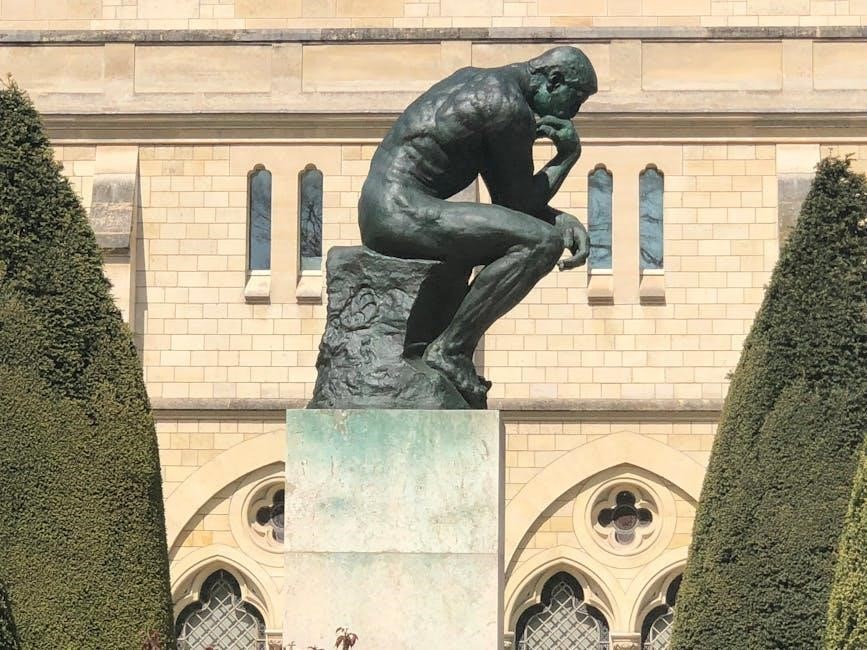
Immanuel Kant (1724-1804) represents a pivotal shift in philosophical thought, bridging the gap between rationalism and empiricism․ His “transcendental idealism” argues that our experience isn’t a passive reception of reality, but actively shaped by the inherent structures of our minds․
Kant posited that we can only know phenomena – things as they appear to us – not noumena – things as they are in themselves․ This is because our understanding is filtered through categories like space, time, and causality, which are not properties of the external world, but rather conditions of our perception․
His work, particularly Critique of Pure Reason, profoundly impacted epistemology and metaphysics․ Kant’s ethical theory, grounded in the “categorical imperative,” emphasizes duty and universalizable moral principles, offering a framework for living a virtuous life based on reason, not inclination․ Understanding Kant is crucial for navigating subsequent philosophical developments․
Nietzsche and the Will to Power
Friedrich Nietzsche (1844-1900) radically challenged traditional morality and metaphysics․ He proclaimed “God is dead,” signifying the decline of religious belief and the collapse of objective values․ Central to his philosophy is the concept of the “will to power,” not as a crude desire for domination, but as a fundamental drive inherent in all life – a striving for growth, self-overcoming, and enhancement․
Nietzsche critiqued “slave morality,” embodied by Christianity, which he saw as suppressing natural instincts and promoting weakness․ He advocated for a “revaluation of all values,” embracing affirmation, creativity, and the acceptance of life’s inherent suffering․
His concept of the “Übermensch” (Overman) represents a future ideal – an individual who transcends conventional morality and creates their own meaning․ Nietzsche’s work, though controversial, profoundly influenced existentialism and continues to provoke reflection on the nature of existence and the meaning of life․
Existentialism: Kierkegaard, Sartre, and Camus
Existentialism, flourishing in the 19th and 20th centuries, emphasizes individual freedom, responsibility, and the subjective experience of being․ Søren Kierkegaard, considered a precursor, focused on the individual’s relationship with God and the “leap of faith” required for belief, highlighting anxiety and despair․
Jean-Paul Sartre famously asserted “existence precedes essence,” meaning humans are born without inherent purpose and must create their own meaning through choices․ This freedom carries immense responsibility, leading to anguish․
Albert Camus explored the “absurdity” of existence – the conflict between humanity’s search for meaning and the meaningless universe․ He advocated for rebellion against this absurdity, embracing life despite its lack of inherent purpose․ Existentialism encourages authentic living, confronting the anxieties of freedom, and taking ownership of one’s existence․

Contemporary Philosophy (20th Century CE – Present)
Analytic and Continental traditions diverge, with cognitive science influencing thought, while applied philosophy gains traction in practical fields like medicine and law․

Analytic Philosophy
Emerging in the early 20th century, Analytic Philosophy prioritizes clarity, precision, and logical rigor, often employing formal logic and linguistic analysis to dissect philosophical problems․ Rooted in the work of figures like Gottlob Frege, Bertrand Russell, and G․E․ Moore, it initially reacted against what it perceived as the vagueness and speculative nature of traditional metaphysics․
Central to this approach is the belief that many philosophical problems arise from misunderstandings of language; therefore, careful attention to linguistic meaning is crucial for their resolution․ Ludwig Wittgenstein, particularly in his later work, significantly shaped the movement, emphasizing the importance of “language games” and the social context of meaning․
Contemporary analytic philosophy encompasses diverse areas, including philosophy of mind, epistemology, ethics, and metaphysics, continuing to refine its methods and address complex issues with a commitment to intellectual clarity and argumentative precision․ Michael Beaney provides a historical overview of this tradition․
Continental Philosophy
Distinguished by its focus on broad historical and cultural contexts, Continental Philosophy encompasses a diverse range of traditions, including phenomenology, existentialism, hermeneutics, and critical theory․ Originating primarily in 19th and 20th-century Europe, it often engages with themes of subjectivity, experience, power, and social critique, differing significantly from the analytic tradition’s emphasis on logic and language․
Key figures like Friedrich Nietzsche, Martin Heidegger, Jean-Paul Sartre, and Michel Foucault challenged traditional metaphysical assumptions and explored the complexities of human existence, often questioning established norms and power structures․ Simon Critchley offers a valuable entry point into this complex field․
Unlike its analytic counterpart, Continental Philosophy frequently embraces ambiguity and interpretive approaches, seeking to understand the historical and cultural forces shaping human thought and experience, offering a rich and nuanced perspective on the human condition․